
Should Child Care Centers in Anaheim Test Their Water?
Most child care operators think about licensing, staffing, and curriculum. Water testing? That doesn't usually make the top ten. But the reality is simple: if you're serving young kids, the water coming out of your taps matters more than you think. We're talking about developing bodies, vulnerable immune systems, and contaminants that don't need much concentration to cause real harm. In Anaheim, where infrastructure ages and plumbing varies wildly from building to building, testing isn't paranoia—it's protection.
Here's what we know. Lead can leach from old pipes. Bacteria can colonize stagnant lines. Nitrates can seep in from surrounding agricultural zones. And none of it shows up with a bad smell or cloudy appearance. You won't see it. The kids won't taste it. But that doesn't mean it's not doing damage.
Why Young Children Are at Higher Risk
Adults can tolerate low-level contaminants without immediate symptoms. Kids under five? Not so much. Their bodies absorb toxins faster, process them slower, and suffer consequences that can last a lifetime. Lead exposure alone has been linked to learning disabilities, behavioral issues, and developmental delays—even at concentrations the EPA once considered "acceptable." Infants are especially vulnerable to nitrates, which can interfere with oxygen transport in the blood and lead to a condition called blue baby syndrome.
The risk isn't theoretical. It's documented, studied, and preventable. But prevention starts with knowing what's in the water. You can't fix what you haven't tested.
Anaheim's Infrastructure Isn't Uniform
Some child care centers in Anaheim operate out of brand-new facilities with modern plumbing. Others are housed in converted homes or older commercial buildings where the pipes haven't been updated in decades. That variability creates risk. Even if the city's water supply is clean when it leaves the treatment plant, contamination can happen between the main line and your faucet.
Lead solder, brass fixtures, and galvanized pipes all pose threats depending on water chemistry. Corrosive water accelerates leaching. Stagnant water—like what sits in a line over a long weekend—concentrates contaminants. And if your center is near farmland or industrial zones, groundwater contamination from nitrates or chemicals becomes a real concern.
What Regulations Actually Require
California has enacted some protections for schools and child care facilities, particularly around lead testing. But the requirements aren't universal, and enforcement varies by jurisdiction. Many centers are only required to test if they're flagged for a known issue or if they rely on a private well. That leaves a lot of facilities operating without any recent data on what's coming out of their taps.
Federal agencies like the CDC and EPA recommend regular testing in environments serving children. But "recommend" doesn't mean "mandate." That gap between guidance and requirement is where risk lives. And it's where smart operators take initiative.
What Testing Actually Catches
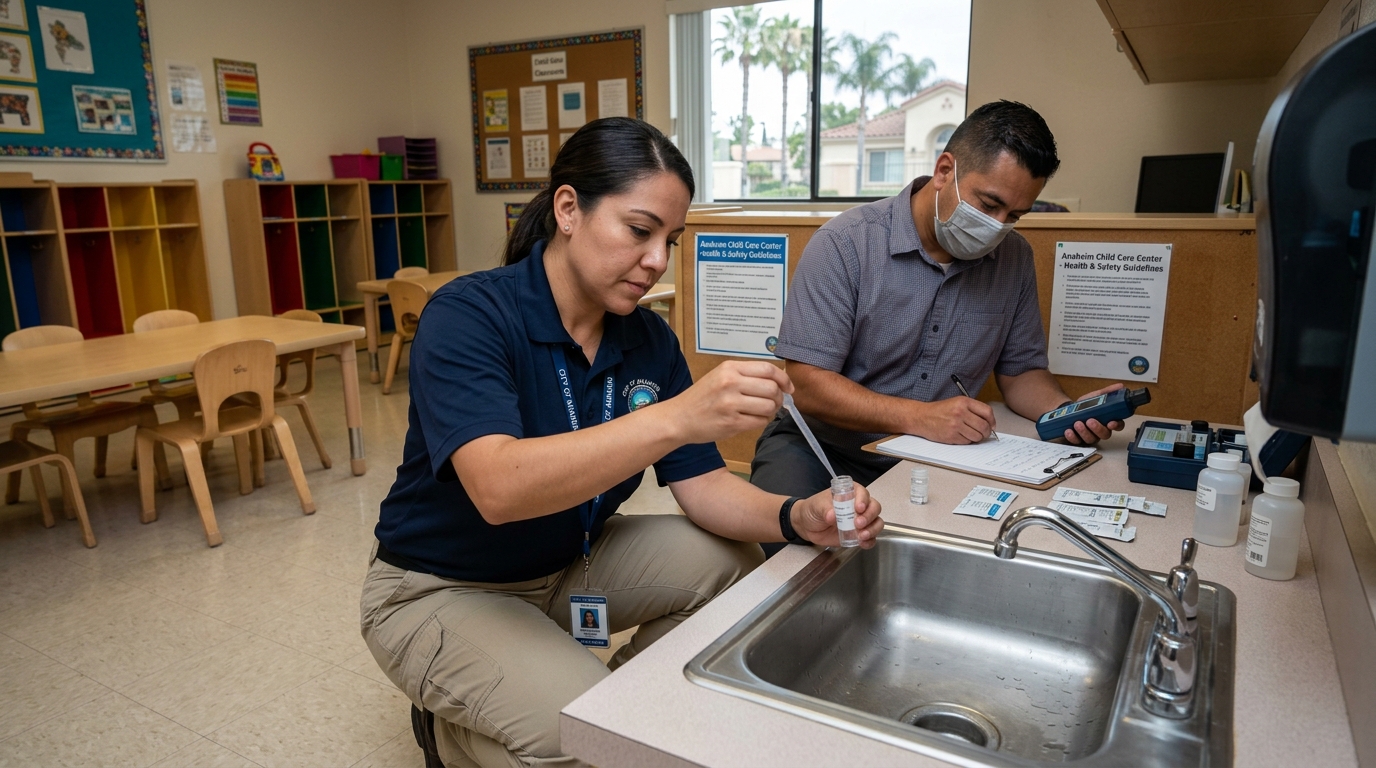
A comprehensive water test will screen for the contaminants that pose the greatest risk to children. That includes:
- Lead from aging pipes, solder, or fixtures
- Bacteria such as E. coli or Legionella, especially in systems with low flow
- Nitrates from agricultural runoff or septic systems
- Copper, which can leach from plumbing and cause gastrointestinal distress
- Chlorine byproducts, which form when disinfectants react with organic matter
Testing gives you a baseline. It tells you what's there, what's not, and whether remediation is needed. And if something does come back elevated, you've got time to act before a child gets sick.
The Costs Are Real But Manageable
We get it—child care centers operate on tight margins. Adding another line item to the budget isn't easy. But lead in water testing doesn't have to break the bank. Basic lead and bacteria screens can run a few hundred dollars, and many local health departments offer subsidized or even free testing programs for facilities serving children.
Remediation, if needed, can be more expensive. Replacing pipes, installing filtration systems, or upgrading fixtures all come with a price tag. But there are grants, loans, and assistance programs available through state and county agencies. And the cost of fixing a problem is almost always lower than the cost of dealing with a child's chronic health issue—or the legal fallout from negligence.
How Often You Should Be Testing
One-time testing isn't enough. Water quality shifts. Pipes corrode. Municipal sources change. What's safe today might not be safe in two years. We recommend annual testing at a minimum, with more frequent checks if your building is older, your plumbing is questionable, or you're in a high-risk area.
Key times to test include:
- After any plumbing repairs or renovations
- When moving into a new facility
- If water pressure, color, or taste changes
- After extended closures, like summer breaks or pandemic shutdowns
- Anytime local water quality reports flag an issue in your area
Documentation Protects You
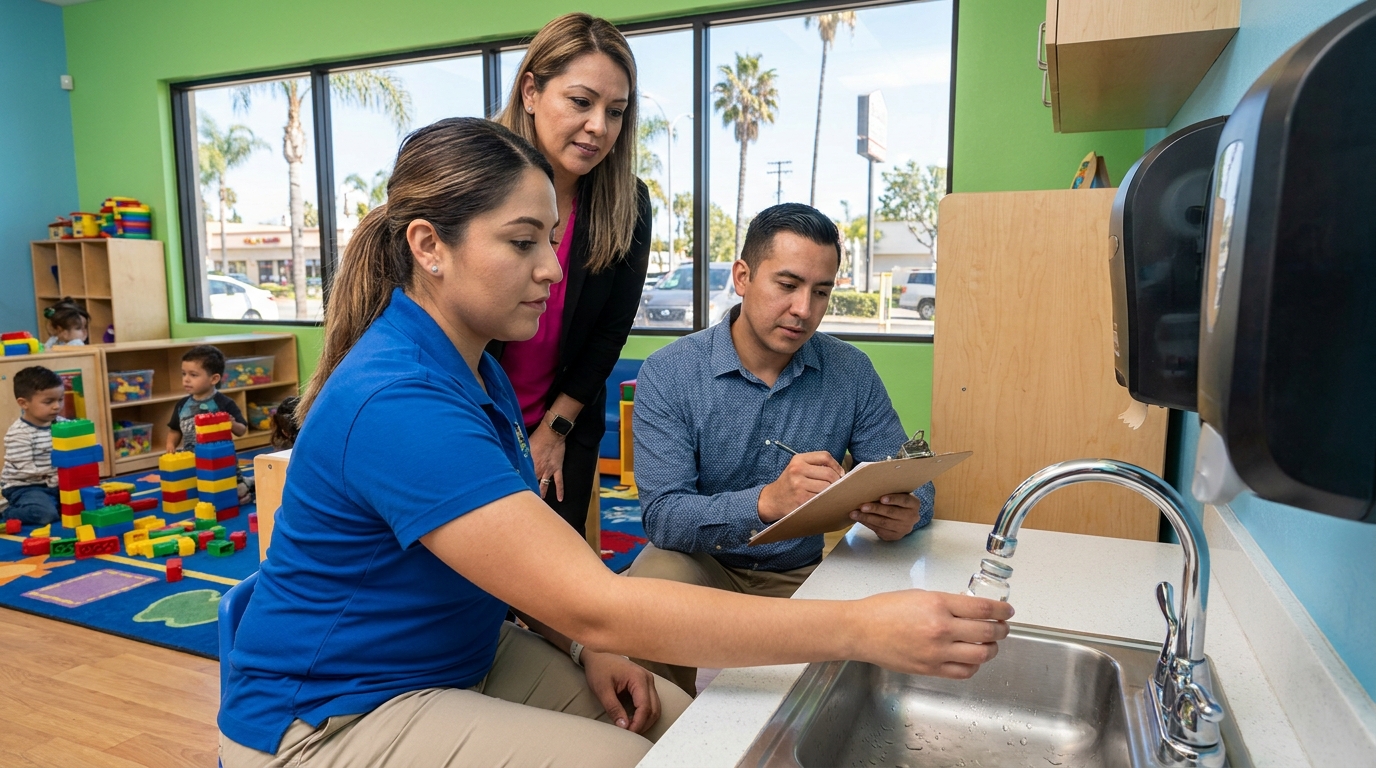
If you're testing your water, document it. Keep copies of lab reports, receipts, remediation plans, and any correspondence with health departments or contractors. This paper trail does two things: it proves you're proactive, and it covers you if a parent or regulator asks questions down the line.
Transparency matters too. Share your testing results with parents. Post them on your website or in your lobby. Most parents won't ask to see them—but knowing they're available builds trust. And in the rare case something does come back elevated, having a communication plan ready shows you're taking it seriously.
Steps to Get Started
If you've never tested your water, here's how to begin:
- Contact your local health department to see if free or subsidized testing is available
- Hire a certified lab to conduct a comprehensive water quality test
- Test all drinking water sources—faucets, fountains, kitchen sinks
- Review results with a water quality expert or environmental consultant
- Develop a remediation plan if contaminants are detected
- Schedule annual retesting and add it to your operational calendar
What Happens When You Don't Test
Ignoring water quality doesn't make the risk go away. It just means you're operating blind. If a child gets sick and it's traced back to contaminated water, the liability is enormous. You'll face lawsuits, regulatory penalties, and reputational damage that can shut your doors for good. Even if no one gets sick, the failure to test can be used against you in licensing disputes or negligence claims.
The smartest operators don't wait for a problem to surface. They test, they document, and they fix issues before they escalate. That's not overkill—it's standard practice in any environment where vulnerable populations spend time.
Resources That Can Help
You're not alone in this. Resources exist to help child care facilities navigate water testing and remediation:
- California Department of Public Health offers guidance and testing resources
- Orange County Health Care Agency provides local support and referrals
- EPA's 3Ts for Reducing Lead in Drinking Water program outlines best practices
- Child Care Resource Centers often have grants or funding information
- Private environmental consultants can conduct audits and recommend solutions
Testing Builds Trust and Safety
Parents trust you with their kids every day. They assume the environment is safe—clean floors, secure gates, and yes, safe water. Testing your water isn't just about compliance or liability. It's about honoring that trust. It's about knowing that when a toddler takes a drink from the fountain or you mix formula in the kitchen, you're not rolling the dice on their health. And in a city like Anaheim, where infrastructure varies and risks are real, testing is the only way to be certain.
Professional bacteria testing services and comprehensive water damage assessment can provide the peace of mind you need to protect the children in your care, while scheduling service ensures regular monitoring and ongoing safety compliance.
Let's Safeguard Your Child Care Center Together
We know how much you care about the children in your facility, and we're here to help you ensure their safety with reliable water testing and expert guidance. If you're ready to take the next step toward a healthier environment, give us a call at 909-994-1893 or schedule service today to get started on protecting your center and building trust with every family you serve.
‹ Back
Recent Posts
-
-
Could Hidden Bacteria Be Lurking in Your Anaheim Home?
October 5, 2026
-
When Should Older Orange County Homes Be Tested for Lead Paint?
September 21, 2026
-
Should You Test Your Indoor Air After a Home Remodel in Anaheim?
September 7, 2026
-