
When to Schedule Asbestos Testing in Orange County
Orange County is full of buildings that look modern on the outside but still have old materials inside. If your place was built before 1980, asbestos is almost always a concern. Even homes and offices from the 1980s and early 1990s can have it hiding under new floors or behind fresh drywall. Remodels don’t get rid of what’s underneath. Commercial spaces, schools, and apartments usually have a long history of repairs and upgrades, which means more chances for asbestos to stick around.

- Pre-1980 construction? High odds of asbestos in walls, ceilings, or floors.
- 1980s and early 1990s? Don’t assume you’re in the clear. Hidden materials can still test positive.
- Remodeled spaces? Old asbestos can stay trapped behind new finishes.
- Multi-use buildings? More renovations, more risk, more places to check.
Knowing the age and history of your property isn’t just helpful. It’s essential. A quick look at building permits or a call to the city can fill in the blanks. For properties with a complicated past, a full inspection is the only way to know what’s really inside. Our company background shows how years of experience in Orange County shape every inspection we do.
Where Asbestos Hides
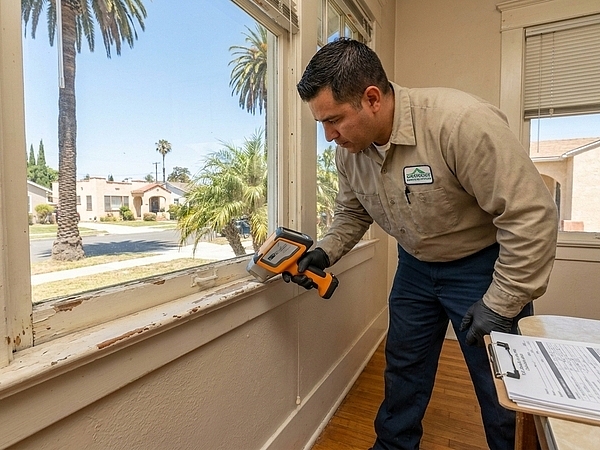
Asbestos doesn’t announce itself. It blends in with everyday materials, making it easy to miss. Floor tiles from the 1970s, popcorn ceilings, and textured wall coatings all top the list. Pipe insulation and duct wraps often go untouched for decades, quietly releasing fibers when disturbed. Roofing shingles, siding, and even old window putty can all contain asbestos. Joint compounds and plaster in older homes? Another common source. These materials don’t look dangerous, but when they break, crumble, or get sanded, asbestos fibers go airborne.
- Floor tiles and adhesives, especially 9x9 or 12x12 tiles from mid-century builds
- Popcorn ceilings and textured walls, common in homes from the 1950s through the 1980s
- Pipe insulation and ductwork, often wrapped in asbestos for fire resistance
- Roofing shingles and siding, older products can still be found on many properties
- Joint compounds, plaster, and wallboard, used in countless remodels and repairs
- Window putty and caulking, easy to overlook, but a frequent culprit
Spotting these materials is only the start. Our asbestos inspection process in Anaheim covers every inch, from attic to basement. We also offer lead-based paint testing and mold inspection for a full safety sweep.
Real-World Safety Steps
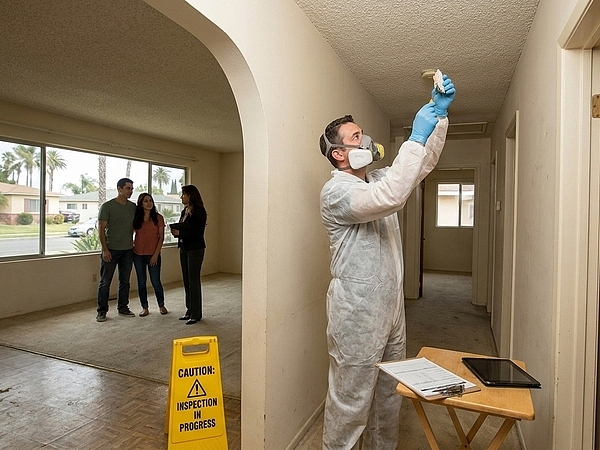
Disturbing asbestos is where the real danger starts. Cutting, drilling, or even scraping old materials can send fibers into the air. That’s why every inspection starts with strict safety steps. We seal off work areas, set up negative air machines, and suit up in protective gear. No shortcuts. Every tool gets cleaned, every surface gets covered, and every sample is handled with care. Homeowners and workers stay out until the job is done. Planning a remodel or demolition? Professional handling isn’t optional. It’s the only way to keep everyone safe.
- Work zones sealed with plastic sheeting and tape
- HEPA-filtered air machines running before, during, and after sampling
- Protective suits, gloves, and respirators for every inspector
- Strict decontamination steps before leaving the site
How Samples Get Collected
Grabbing a chunk of tile or insulation won’t cut it. Each sample needs to be clean, uncontaminated, and clearly labeled. Our inspectors use new tools for every sample, seal them in airtight containers, and document the exact spot they came from. The lab only gets what it needs. No dust, no debris, no mix-ups. This level of detail means results you can trust. The same standards apply to our bacteria testing services and particle assessment. Every test, every time, the process stays tight.
- Fresh tools for each sample, no cross-contamination
- Samples sealed in leak-proof, labeled containers
- Chain-of-custody forms track every step from site to lab
- Photos and notes document the exact location and condition
What the Report Tells You
Lab results shouldn’t leave you guessing. Our reports break down every finding. What was tested, where it came from, and what the results mean for your property. If asbestos shows up, you see exactly which materials are affected and where they’re located. No jargon, no confusion. Just clear answers. We walk you through the next steps, whether that means removal, sealing, or ongoing monitoring. Every question gets answered. Every concern gets addressed. You finish the process knowing exactly where you stand.
What Happens After Testing
Test results in hand, the next move is clear. If asbestos is present, we lay out your options. Sometimes, sealing the area is enough. Other times, full abatement is the only safe route. Condol's Environmental Services connects you with trusted abatement partners and helps you plan the work from start to finish. If your property is clear, we offer tips to keep it that way. Regular checkups, safe renovation practices, and ongoing monitoring. For those who want a full safety net, our allergen assessment and post-mold verification service keep your environment healthy year-round.
- Clear plan for removal or management, no uncertainty
- Direct connection to licensed abatement professionals
- Advice on safe renovations and future inspections
- Ongoing support for air quality, mold, and allergen concerns
Speak with Our Team About Asbestos Testing in Orange County
Questions about asbestos testing or environmental services in Anaheim? Call 909-994-1893 or contact us to connect with Condol's Environmental Services. We’re here to help you protect your property and everyone inside it.
‹ Back
Recent Posts
-
-
Could Hidden Bacteria Be Lurking in Your Anaheim Home?
October 5, 2026
-
When Should Older Orange County Homes Be Tested for Lead Paint?
September 21, 2026
-
Should You Test Your Indoor Air After a Home Remodel in Anaheim?
September 7, 2026
-