
Why Asbestos Inspections Matter Before Renovations in Orange County
Most property owners think renovations are just about design and budget. New floors, fresh paint, maybe a wall comes down. But there's a hidden risk in older buildings that can turn a simple remodel into a health crisis — and if you skip the inspection, you're gambling with lives. Asbestos doesn't announce itself. It sits quiet in walls, ceilings, and tiles until someone disturbs it. Then it becomes airborne, invisible, and dangerous.
So here's what matters. If your property was built before the 1990s, there's a real chance asbestos is lurking somewhere. And the moment you start tearing into materials without knowing what's there, you're exposing everyone on site — and possibly beyond. Every renovation should start with an asbestos inspection. Every material should be tested. And every decision should be grounded in what's actually in your building, not what you hope isn't there.
When Asbestos Hides in Plain Sight
Asbestos was everywhere for decades. Insulation, floor tiles, popcorn ceilings, roofing shingles, even some paints and adhesives. Builders loved it because it was cheap, fireproof, and durable. The problem? When those materials break down or get disturbed, they release microscopic fibers that lodge in your lungs. And once they're in, they don't come out.
Exposure doesn't show up right away. It can take years — sometimes decades — before symptoms appear. By then, the damage is done. Asbestosis, lung cancer, mesothelioma. These aren't minor health scares. They're life-altering diagnoses that could have been avoided with a single inspection before the first hammer swung.
Orange County Properties Carry More Risk Than You Think
A huge number of homes and commercial buildings across Orange County were constructed during asbestos's heyday. We're talking pre-1980s construction, and even into the early '90s in some cases. That means thousands of properties are sitting on materials that could become hazardous the second renovations begin.
Add in the coastal climate — salt air, humidity, temperature swings — and those materials degrade faster. What was stable twenty years ago might be brittle and friable now. And friable asbestos is the most dangerous kind, because it crumbles easily and releases fibers with minimal disturbance. You don't need a sledgehammer to create a problem. Sometimes a screwdriver is enough.
The Law Doesn't Care About Your Timeline
California has strict rules around asbestos, and Orange County falls under some of the toughest air quality regulations in the state. If your building was constructed before 1981, you're required to conduct an asbestos survey before any renovation or demolition work. That's not a suggestion. It's the law, enforced by SCAQMD and Cal/OSHA.
Ignore it, and you're looking at fines, work stoppages, and potential lawsuits. If someone gets exposed because you didn't test, the liability falls on you. Contractors can refuse to work on a site without clearance. Inspectors can shut down your project mid-swing. And if asbestos is found after work has started, you'll be paying for abatement, disposal, and possibly medical monitoring for everyone involved. The cost of skipping an inspection is always higher than the cost of doing one.
What a Real Inspection Looks Like
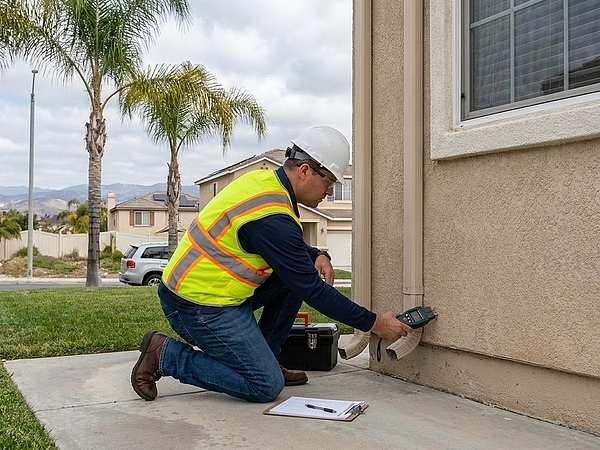
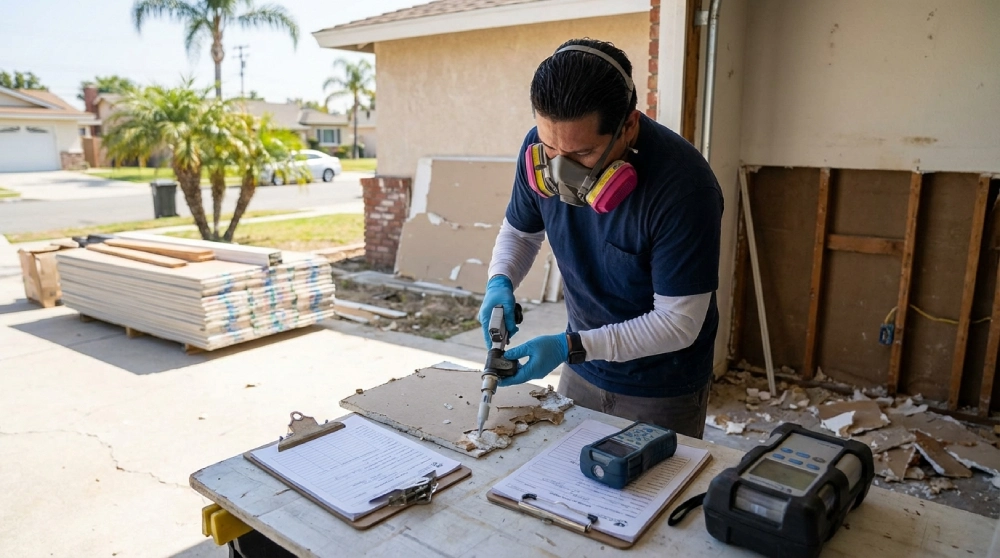
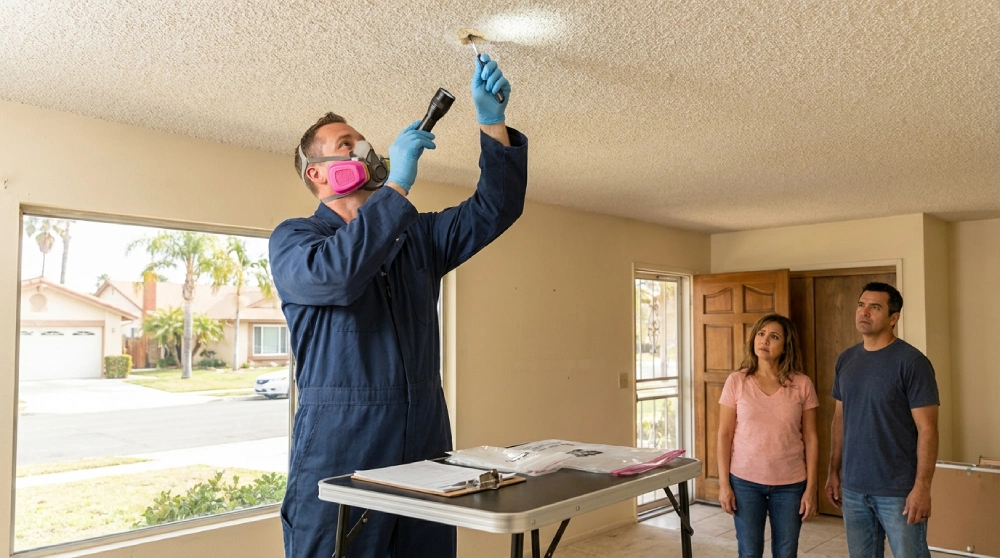
A certified asbestos consultant walks your property and identifies suspect materials. They're trained to spot the usual culprits and the hidden ones. Samples get collected and sent to a lab for analysis. If asbestos is confirmed, you'll get a report that outlines where it is, how much, and what condition it's in.
From there, you have options:
- Leave it alone if it's in good condition and won't be disturbed
- Encapsulate it to seal fibers in place
- Remove it entirely through licensed abatement professionals
- Plan your renovation around it to avoid disturbance
- Document everything for future buyers or tenants
The inspection itself is fast. The peace of mind lasts the entire project. And if asbestos is found, you'll know exactly how to handle it before anyone's health is on the line.
Who Gets Hurt When You Skip This Step
It's not just the crew swinging hammers. Asbestos fibers travel. They stick to clothing, tools, and shoes. They drift through vents and open windows. Family members, neighbors, even pets can be exposed if containment isn't handled correctly.
Here's who's at risk when asbestos goes undetected:
- Contractors and subcontractors working on site
- Property owners and tenants living or working nearby
- Inspectors and delivery personnel entering the space
- Future occupants if fibers weren't fully remediated
- Anyone handling debris or materials removed from the site
One oversight can create a chain reaction of exposure. And once fibers are airborne, there's no taking them back.
The Materials You Wouldn't Suspect
Most people know about asbestos insulation. But it shows up in places you wouldn't expect. Vinyl flooring. Drywall joint compound. Textured ceilings. Pipe wrap. Even some caulking and roofing felt. If it was installed before 1990, it's worth testing.
Common asbestos-containing materials include:
- Popcorn or acoustic ceiling texture
- 9x9 or 12x12 vinyl floor tiles and the adhesive underneath
- Cement siding and roofing shingles
- Pipe and duct insulation, especially in older HVAC systems
- Vermiculite attic insulation
You can't identify asbestos by looking at it. The only way to know is through lab testing. And the only way to stay safe is to test before you touch.
Abatement Isn't DIY Territory
If asbestos is found, removal has to be handled by licensed professionals. This isn't a YouTube tutorial situation. Abatement requires containment barriers, negative air pressure, protective gear, and proper disposal at approved facilities. Cutting corners here doesn't just risk your health — it's illegal.
Licensed abatement contractors know how to:
- Seal off work areas to prevent fiber migration
- Use HEPA filtration and wet methods to control dust
- Dispose of materials according to state and federal regulations
- Conduct clearance testing to confirm the space is safe
- Provide documentation for future property transactions
Yes, abatement adds time and cost to your project. But it's the only way to ensure the job is done right — and that no one pays the price later.
Protecting Value Along With Health
An asbestos inspection isn't just about safety. It's about protecting your investment. Properties with undisclosed asbestos can lose value, face legal claims, and create disclosure nightmares down the road. If you ever plan to sell or lease, having a clean inspection report — or documented abatement — is a selling point, not a liability.
Buyers and tenants want proof that the space is safe. Lenders and insurers want to know there's no hidden risk. And if you're flipping or developing, an inspection protects you from inheriting someone else's problem. It's due diligence that pays off in every direction.
Renovations Done Right Start Before the First Swing
Taking on a renovation is exciting. But excitement doesn't replace preparation. The properties most at risk are the ones that look fine on the surface — until someone starts pulling up flooring or cutting into drywall. By then, it's too late to test. The fibers are already loose.
We help property owners in Orange County move forward with confidence. That means knowing what's in your building before work begins, understanding your options if asbestos is found, and connecting you with certified professionals who can handle it the right way. For more information about when to schedule asbestos testing, or to explore our full range of mold inspection and lead-based paint testing services, we're here to help. No shortcuts. No surprises. Just clear answers and a safe path forward.
Let's Make Your Renovation Safe and Worry-Free
We believe every renovation should start with peace of mind, not uncertainty. If you're planning work on an older Orange County property, let's make sure asbestos isn't putting your project or your health at risk. Reach out to us today at 909-994-1893 or schedule service to get expert guidance and schedule your inspection before you begin.
‹ Back
Recent Posts
-
-
Could Hidden Bacteria Be Lurking in Your Anaheim Home?
October 5, 2026
-
When Should Older Orange County Homes Be Tested for Lead Paint?
September 21, 2026
-
Should You Test Your Indoor Air After a Home Remodel in Anaheim?
September 7, 2026
-